

Opponents of artificial intelligence tend to fixate on the same handful of examples.
Creepy images. Political bot farms. Students outsourcing their homework. A slurry of uncanny faces, fake essays, and cultural unease, all delivered with the tone of someone who has just discovered fire and would like to put it back.
These critiques aren’t entirely wrong. Every general-purpose technology produces its share of nonsense. The printing press gave us pornography before philosophy. Television gave us game shows before documentaries. The internet gave us comment sections.
But mistaking the froth for the substance is a category error. The real story of AI isn’t what it’s doing to art school critiques or term papers. It’s what it’s doing to human flourishing, quietly, relentlessly, and at scale.
Nowhere is that more obvious than in medicine.
While the public debate churns over chatbots and memes, AI systems running in the background of hospitals, labs, and research institutions are reshaping how we detect disease, design treatments, and save lives. These breakthroughs weren’t made possible by clever prompts or lightweight apps. They were made possible by an ever-growing river of electrons flowing through data centers, performing calculations no human mind could attempt, let alone finish.
Here are just a handful of examples. Not the whole story. Not even close. But enough to clarify what’s actually at stake.
The Cancer Detector You Can Wear

One of the most striking advances in early cancer detection didn’t come from a new drug, but from a new way of watching the body over time.
Researchers at MIT recently unveiled a wearable ultrasound scanner designed to detect breast cancer earlier and more reliably than traditional screening. Unlike mammograms, which provide occasional snapshots, this device allows for frequent, even continuous, imaging of breast tissue.
That difference matters. Cancer doesn’t appear all at once. It emerges as a pattern over time. And pattern recognition is precisely what machine learning does best.
The intelligence here doesn’t live in the wearable itself. It lives in the AI models trained on vast datasets of ultrasound images, tissue changes, and patient outcomes, models that must be trained, updated, and refined using enormous computational resources. The device is the sensor. The data center is the brain.
The human consequence is straightforward: earlier detection, less invasive treatment, higher survival rates. That’s not a tech novelty. That’s medicine doing what it exists to do.
The Scan That Finds Lung Cancer Before Doctors Can
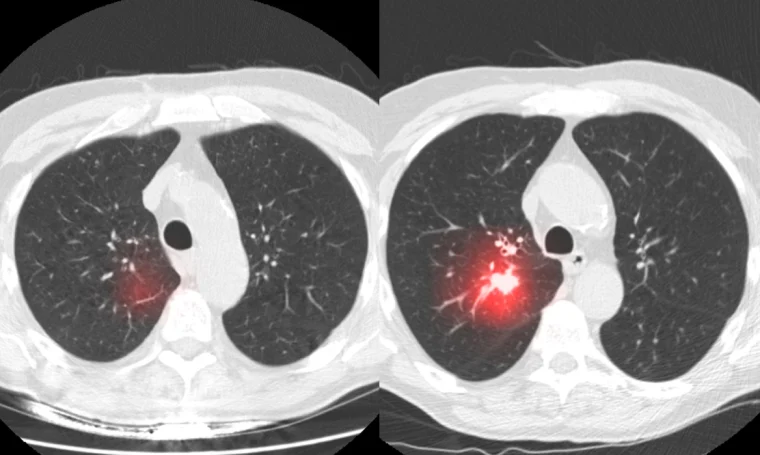
Lung cancer remains one of the deadliest cancers largely because it hides until it’s too late.
An AI system developed by Google can analyze CT scans and detect lung cancer earlier and more accurately than radiologists working alone, particularly in cases where prior scans aren’t available. The system identifies statistical irregularities so subtle that even trained eyes often miss them.
This isn’t about replacing clinicians. It’s about giving them a second set of eyes that has effectively examined millions of scans and never gets tired, distracted, or overconfident.
Training such a model requires immense datasets and repeated, compute-intensive learning cycles. Deploying it at scale requires reliable, centralized infrastructure. Without modern data centers, this capability doesn’t exist.
The payoff is lives saved through earlier intervention, the kind that never makes headlines precisely because it prevents catastrophe rather than responding to it.
Solving Protein Folding
DeepMind’s AlphaFold
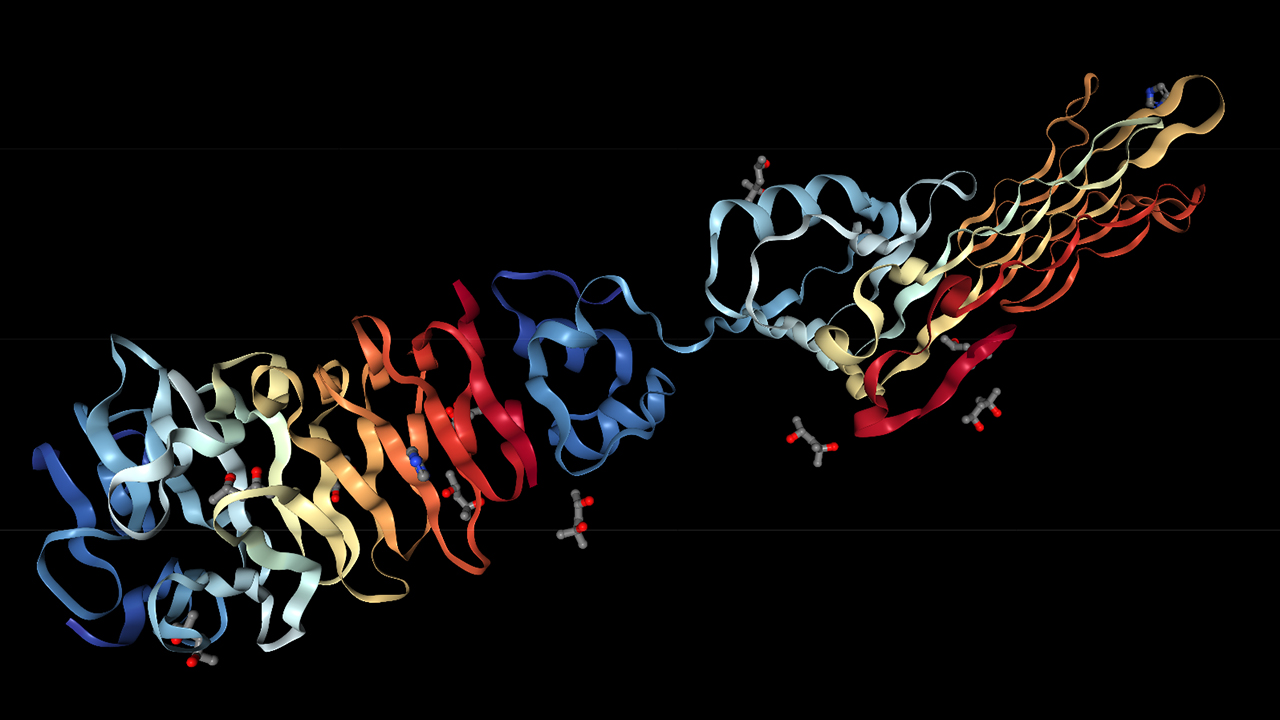
For over fifty years, biologists struggled to predict how proteins fold into three-dimensional structures, a problem foundational to understanding disease and designing drugs.
In 2020, DeepMind solved it.
AlphaFold used deep learning to predict protein structures with near-experimental accuracy and then released predictions for over 200 million proteins, covering nearly all known biology.
This immediately accelerated drug discovery, rare disease research, enzyme engineering, and vaccine development. Labs that had spent years stuck on a single structure suddenly had answers in hours.
AlphaFold required training enormous neural networks on vast biological datasets and running inference at unprecedented scale. This was not clever software. It was computational force applied intelligently.
Drugs Designed by AI
Insilico Medicine
Traditional drug discovery is slow, expensive, and failure-prone. Insilico Medicine used AI to invert that process.
In 2021, Insilico advanced an AI-designed drug for idiopathic pulmonary fibrosis into human clinical trials. The AI didn’t just optimize an existing molecule. It identified a novel biological target and generated a new compound to address it.
This process required screening millions of molecular candidates in silico, something only possible with large-scale compute. The result was a compressed timeline and dramatically lower cost.
AI here is not a helper. It is the architect.
A Blood Test for Dozens of Cancers
GRAIL and the Galleri Test
GRAIL developed the Galleri blood test, which uses machine learning to detect signals of more than 50 types of cancer from fragments of DNA circulating in the bloodstream.
The AI analyzes methylation patterns across enormous datasets of cancer and non-cancer patients and predicts both the presence of cancer and its likely tissue of origin.
This is not a gimmick. It is a statistical feat made possible by training models on population-scale genomic data. Without AI and compute at scale, multi-cancer screening from a single blood draw remains science fiction.
AI That Predicts Sepsis Before Doctors Can
Prenosis and FDA-Cleared AI
In 2024, the FDA authorized the first AI-based sepsis prediction tool from Prenosis.
The system continuously analyzes patient vitals, lab results, and clinical data to identify sepsis risk hours earlier than traditional clinical protocols. Sepsis kills quickly. Time saved is lives saved.
This system runs continuously across hospital populations, ingesting and analyzing real-time data streams. It is only possible with centralized, reliable compute infrastructure.
This is AI doing its most valuable work: quiet, preventative, and life-saving.
Personalized Cancer Treatment at Scale
Tempus
Tempus uses AI to analyze tumor genetics, clinical records, and treatment outcomes to guide personalized cancer therapy.
Rather than treating patients based on population averages, Tempus matches individuals to therapies based on statistically similar prior cases.
This requires constant ingestion of molecular and clinical data and continuous retraining of models. It replaces educated guesswork with probability.
The benefit is fewer ineffective treatments and faster paths to remission.
The Throughline Everyone Misses
Every one of these breakthroughs shares a simple truth.
They scale.
They require enormous datasets. Constant retraining. Continuous inference. Reliable, centralized compute. In other words, they require data centers.
This is what gets lost in the debate over AI’s cultural side effects. The electrons flowing through those facilities aren’t animating novelty apps. They’re enabling earlier diagnoses, smarter treatments, and longer lives.
You can worry about lazy students and bad art. Fine. But don’t confuse the sideshow with the main event.
The real story of AI isn’t what it’s doing to aesthetics or etiquette. It’s what it’s doing to the human condition, quietly and decisively, one calculation at a time.
And it’s only getting started.
