
Skip to content Skip to footer

Data Centers and the Capacity Problem.

Data centers have become a political flashpoint. But the real issue isn’t the facilities themselves. It’s whether the United States responds to rising electricity demand by expanding supply or by accepting scarcity, rationing, and higher prices.

capacity = growth

This is a supply problem, not a demand problem.

Until recently, data centers were invisible infrastructure. Today they sit at the center of a national fight over electricity costs, reliability, and local development. At its core, the data center debate is a debate between scarcity and capacity. We side with capacity.

Every energy system is governed by three levers: price, demand, and supply. Right now, Americans are being told that their best options are to raise prices or freeze demand: higher rates, moratoria, construction bans, and rationing by another name. That approach guarantees higher costs, weaker reliability, and slower growth.

There is only one lever that can simultaneously support affordability, reliability, and human flourishing: expanding supply.

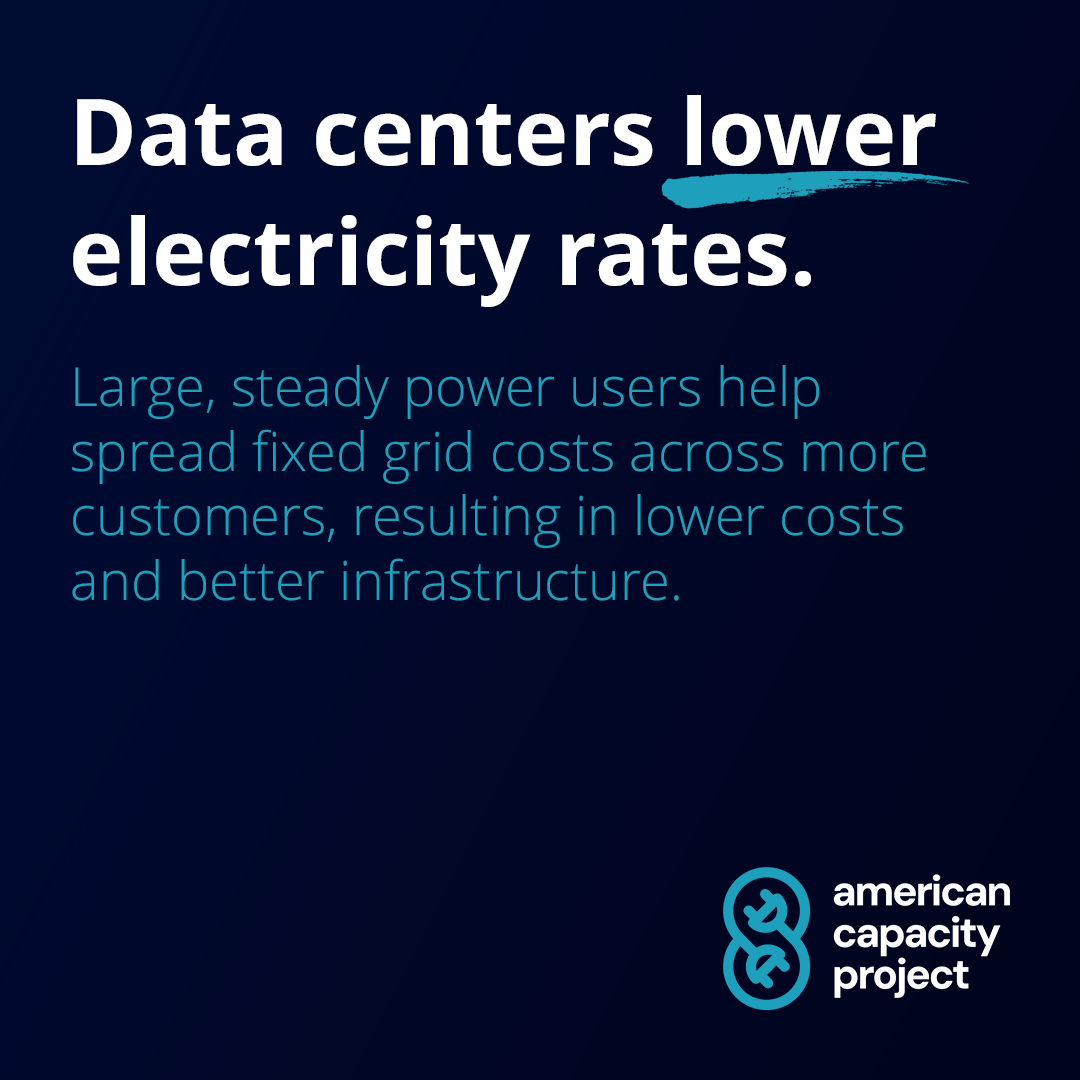
Data centers require power. Meeting that demand by building more capacity doesn’t just serve data centers. It strengthens the grid, lowers long-run prices, improves reliability, and benefits everyone connected to it.

The Problem

High prices and grid stress reflect years of underbuilding and regulatory delay, not the sudden arrival of data centers.

The Solution

When supply is allowed to grow, prices stabilize, reliability improves, and everyone benefits from a stronger grid.
downloads & Assets

Fight with facts.

If your town is debating a data center, these one-pagers give you the arguments people actually remember.

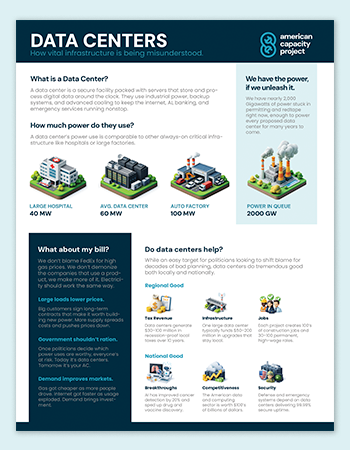
A Quick Primer

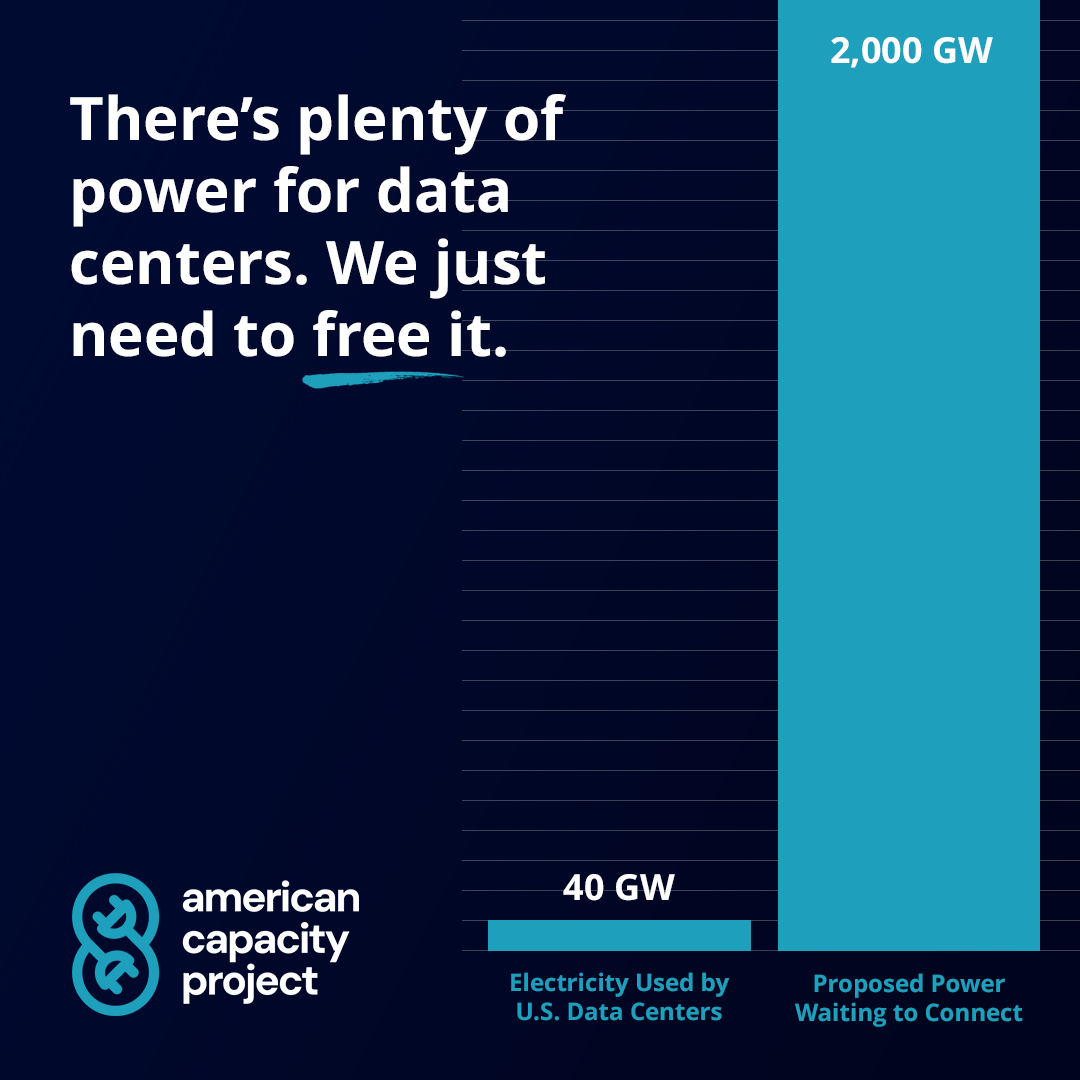
A visual explainer of what data centers are, how much power they use, and why demand growth isn’t the problem — supply is.

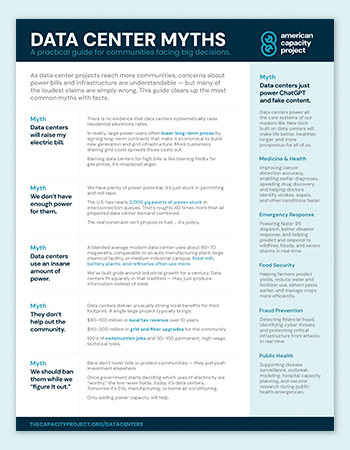
Myths vs. Facts

A clear, on-the-ground guide that debunks common claims about bills, power, and water — and refocuses the debate on building capacity.

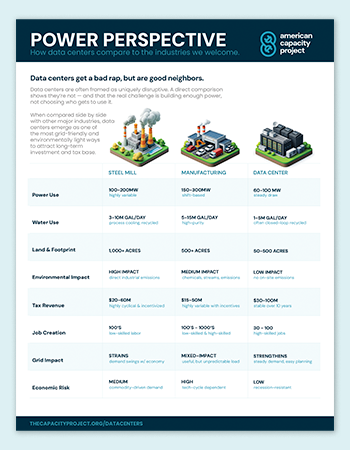
Industry Comparison

A simple side-by-side comparison showing how data centers stack up against major industries on power, water, land, and local benefits.

the myths

The narrative they've spun.

Public debate around data centers is dominated by a small set of repeated claims. Many sound intuitive, but they do not hold up to closer examination.

The Facts

What the data actually shows.

These facts point to the same conclusion: the problem is constrained supply, not new demand.

shareable assets

Educate your neighbors.

Some points are worth stating simply. These capture the core facts of the data center debate in plain terms.

Why data centers matter.

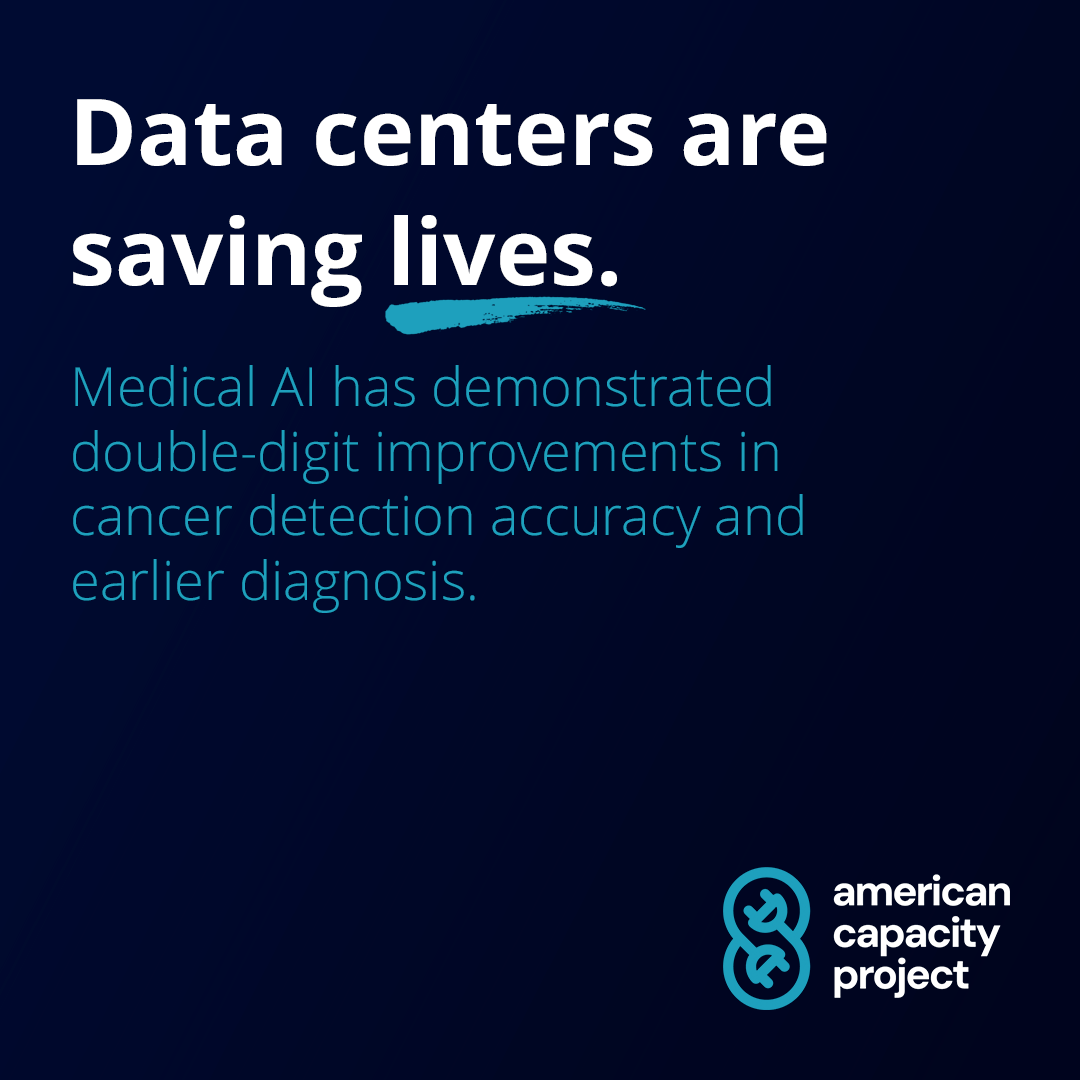
Medical imaging, diagnostics, drug discovery, genomics, and AI-assisted care rely on large-scale compute. Earlier cancer detection, faster trial analysis, and more precise treatment decisions all depend on the quiet work of data centers running in the background. This isn’t about novelty. It’s about lives saved and suffering reduced.

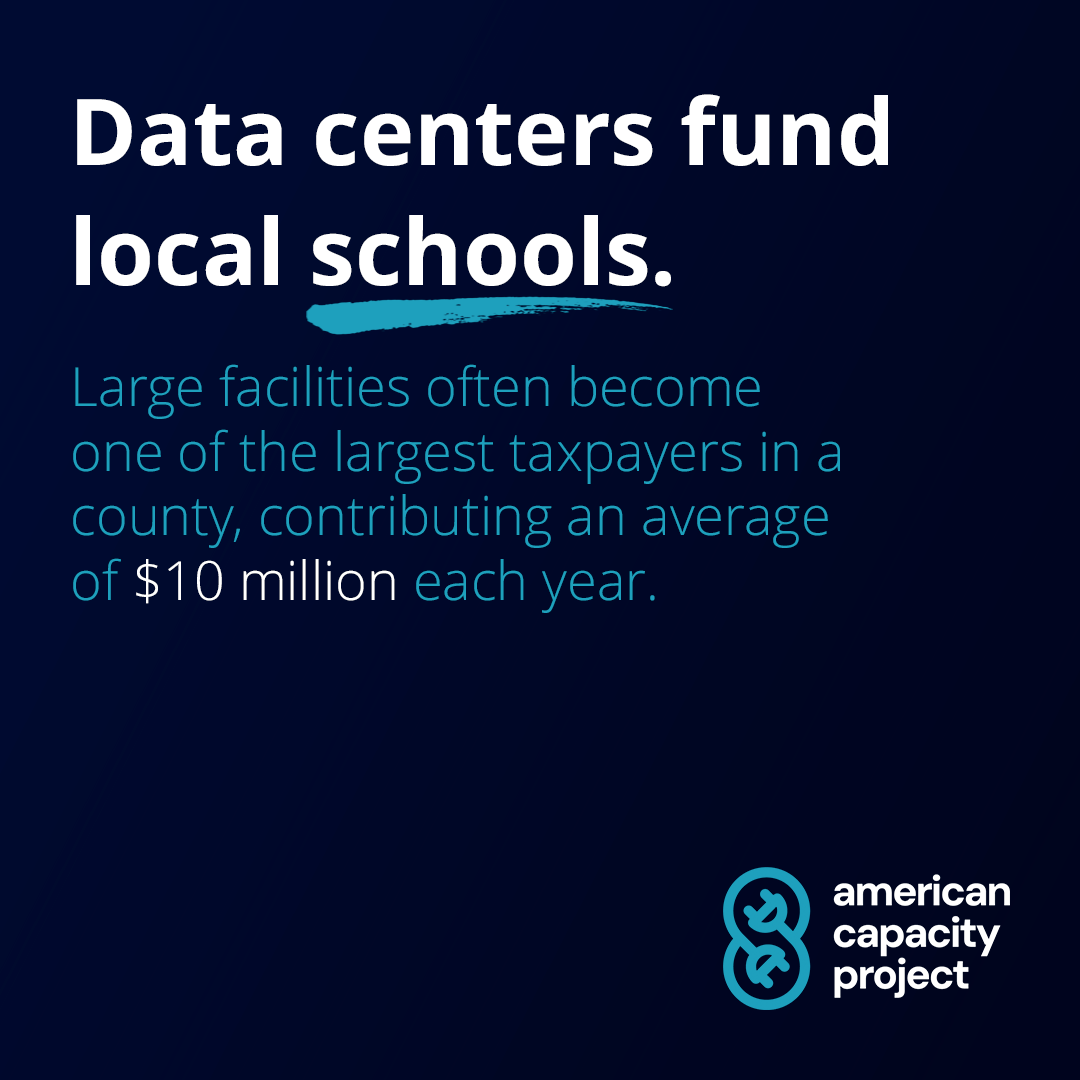
Data centers anchor construction, skilled trades, equipment manufacturing, engineering, and long-term operations. They bring durable investment and tax bases to places that have often watched industry leave. These are not short-term booms. They are long-lived assets tied to physical work and local paychecks.

Compute is strategic infrastructure. Nations that cannot build and power it fall behind in science, industry, defense, and innovation. When capacity is outsourced, so is capability. Powering data centers at home is part of maintaining technological and economic independence.

Cloud services, logistics networks, communications, emergency response, and financial infrastructure all depend on resilient data capacity. When systems fail, it isn’t abstract. It shows up as outages, delays, and breakdowns that affect ordinary life. Reliability starts upstream, with power and capacity.

From engineering and design to education, agriculture, and small business, compute extends human capability. Data centers allow people to work faster, solve harder problems, and compete at scale without leaving their communities. They multiply effort rather than replace it.

Infrastructure choices compound over decades. Power systems built for growth expand opportunity; systems built around limits narrow it. Data centers sit at the intersection of that choice. Whether we build for capacity or manage scarcity will shape what the next generation is able to do.
Marc Oestreich

Blaming data centers for rising electricity prices is like blaming FedEx for the cost of gasoline — demand didn’t fail; supply was boxed in.

Marc Oestreich

Energy Writer
Emmet Penney

The real threat to your power bill, long-term, is not coming from the additional energy that data centers are using. It comes from a power grid that is increasingly unreliable and fails to match our needs even without the addition of any new data centers.

Emmet Penney

Senior Fellow at the Foundation for American Innovation
Liz Peek

Yes, data center growth is expanding and pushing electricity needs higher. But the all-of-the-above energy strategy from the White House will meet that demand. The U.S. must dominate the AI race, or China will. Abundant and cheap fossil fuels will keep us in the pole position to do just that.

Liz Peek

Powering the conditions for progress.

The Project

The Capacity Project is an independent research and analysis initiative focused on energy supply, infrastructure, and system design. We work to make complex energy systems legible and to advance policies that support abundant, reliable, and affordable power.

Get GridBrief

The American Capacity Project © 2026. All Rights Reserved.